The chemistry that refuses to fail.
Two NFPP pouch cells that survive a 12-hour dead short and a 2-point nail — then keep discharging at −40 °C.
Tortured on purpose
Four ways to kill a battery. It survived all of them.
- Dead short: A 3 mΩ short held for 12 hours — 449.7 A peak, 98.69 °C max. Tested at −20, 25 and 60 °C to IEC 60079-11, no fire, no explosion, no thermal runaway. (449.7 A peak · 98.69 °C max · 100 °C · water boils · short applied · 12 hrs)
- Nail penetration: A fully charged cell takes a 2-point nail: 55 °C max under the nail, and the cell holds 3.1 V after penetration. (2-point steel nail · 55 °C max at entry · 3.1 V held · 0 V)
- Cold: Discharges at −40 °C, charges from −20 °C — below 0 °C it charges at 0.3C (CC to 3.5 V). (discharge −40 → 60 °C · charge −20 → 60 °C · below 0 °C · charge at 0.3C · −40 · −20 · 0 · 20 · 40 · 60 °C)
- Endurance: 6,000 cycles to ≥70% at 3C, room temperature — the series-level claim runs 8,000–10,000 cycles at 1C to ≥80%. (100% · 70% floor · 6,000 cycles)
Dead short
A 3 mΩ short held for 12 hours — 449.7 A peak, 98.69 °C max. Tested at −20, 25 and 60 °C to IEC 60079-11, no fire, no explosion, no thermal runaway.
Redrawn from the catalog
Push it to 9C — it barely notices.
The printed rate-capability charts, redrawn natively. Each figure is the legend percentage from the catalog, transcribed digit for digit.
● discharge● charge
0.2C → 9C · retention, axis from 80 %
Printed-source note
The printed charge legend reads 6C=93.96% — out of sequence with its neighbours, transcribed exactly as printed.
The spec sheet
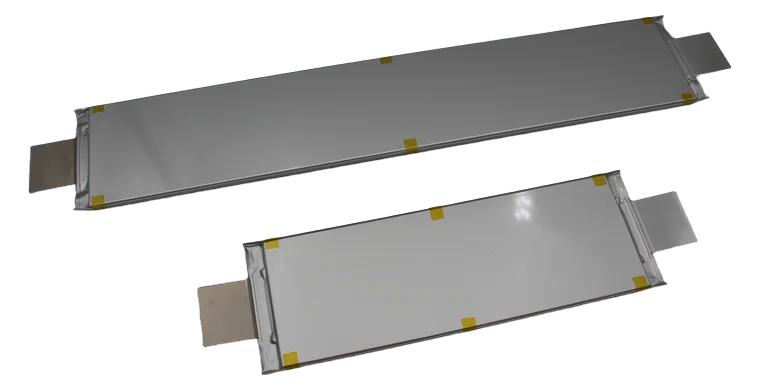
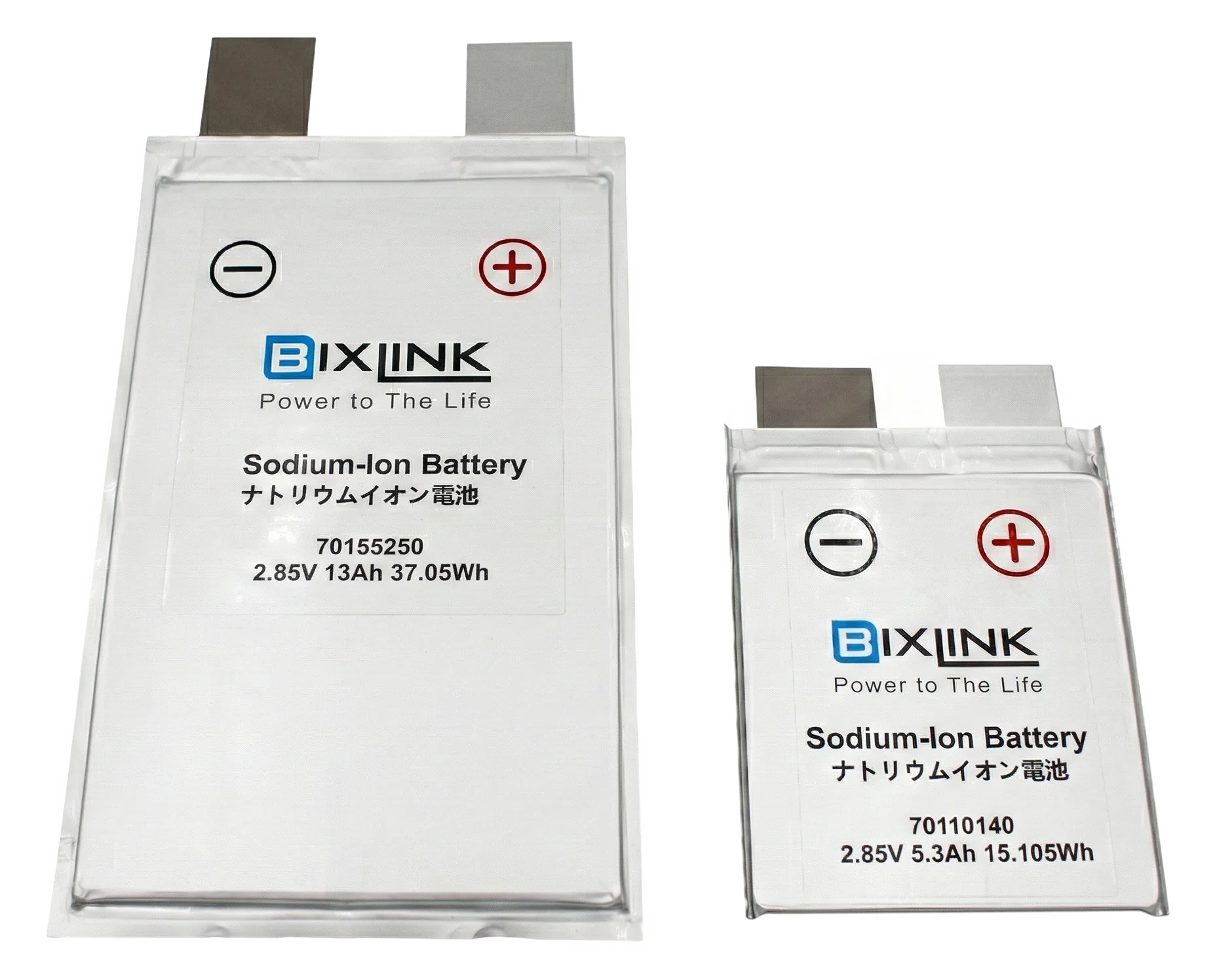
Two pouch cells, one spec sheet.
- 70155250
- Capacity13.0 AhEnergy37.05 WhThickness7.3 mmWeight400 g
Drawn to scale from the catalogue's own dimensions — the two outlines are true to each other.
| Spec | 70110140 · 5.3 Ah | 70155250 · 13.0 Ah |
|---|---|---|
| Chemistry | NFPP (Sodium Iron Pyrophosphate) | NFPP (Sodium Iron Pyrophosphate) |
| Capacity (0.2C @ 25±3 °C) | 5.3 Ah | 13.0 Ah |
| Nominal voltage | 3.0 ± 0.1 V | 3.0 ± 0.1 V |
| Operational voltage | 1.8 ~ 3.5 V | 1.8 ~ 3.5 V |
| Max charging current (cont. / peak) | 12C / 15C | 12C / 15C |
| Max discharging current (cont. / peak @5 s pulse @2.5 V) | 20C / 40C | 20C / 40C |
| Energy density (volumetric) | 138 Wh/L | 144 Wh/L |
| Energy density (gravimetric) | 88 Wh/kg | 97.5 Wh/kg |
| Dimensions (T × W × L) | 7.1 × 110 × 140 mm | 7.3 × 155 × 250 mm |
| Weight | 171 g | 400 g |
| Charge temperature | −20 ~ 60 °C | −20 ~ 60 °C |
| Discharge temperature | −40 ~ 60 °C | −40 ~ 60 °C |
| Charging current below 0 °C | 0.3C (CC to 3.5 V) | 0.3C (CC to 3.5 V) |
| Cycle life (to ≥70% @3C, RT) | 6,000 | 6,000 |
Printed-source notes
Values as printed in the catalog spec table, subject to tolerances; specifications may change without notice.
The photographed cell labels read 2.85 V (and the 13 Ah cell in the photo carries code 701455320), while the spec table prints 3.0 ± 0.1 V and 70155250. Table values are shown here exactly as printed.
Cycle-life figures differ by test condition: 6000 cycles is measured to ≥70% at 3C, RT; the 8,000–10,000 cycle performance figure is the series-level claim at 1C charge/discharge to ≥80% retention.
Beyond the cell
The cell is just the beginning.
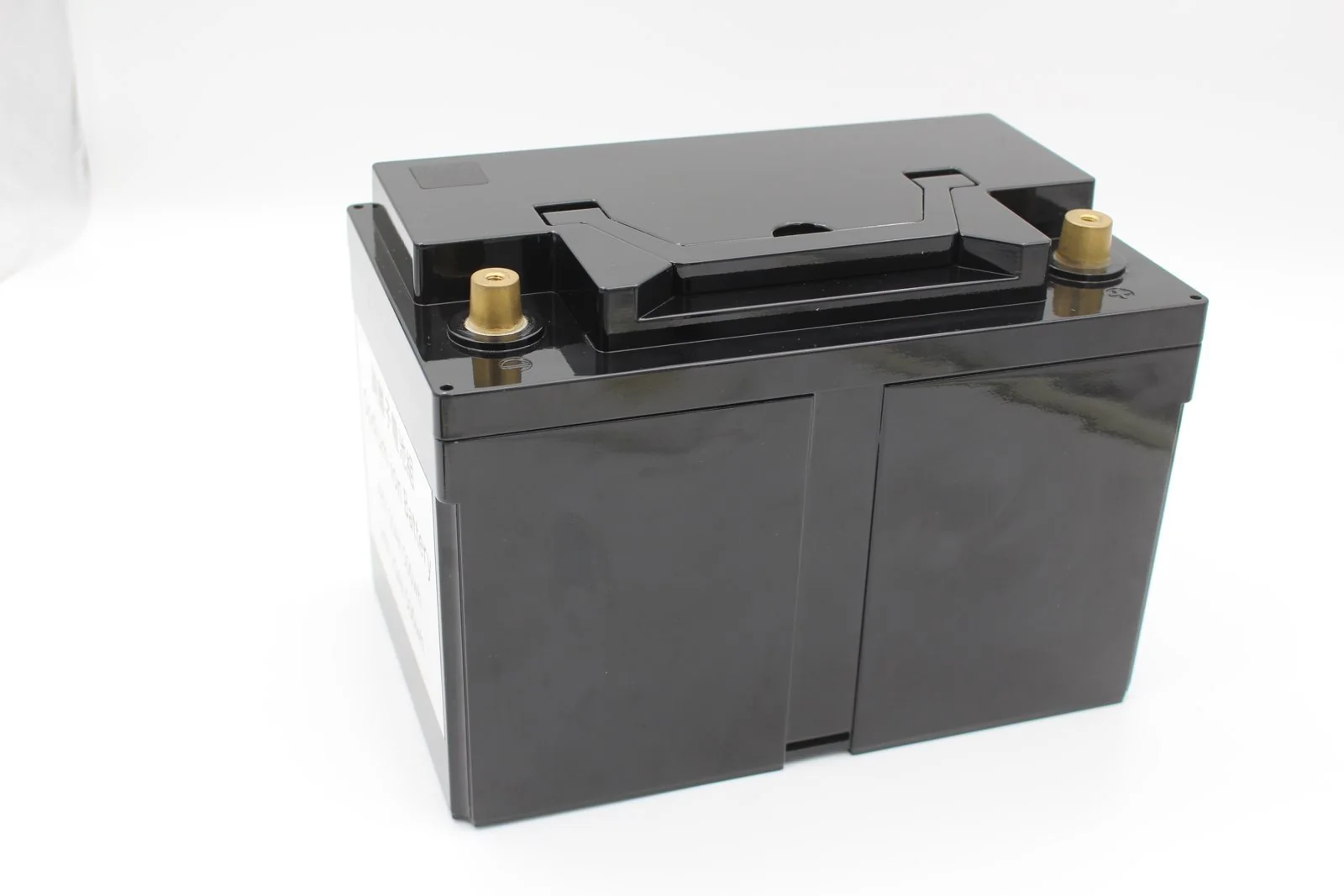
- 01Custom pack capabilities12 V / 24 V / 48 V battery solutions with series/parallel configurations
- 02Enclosure & structureProfessional mechanical design & precision assembly
- 03Technology transferTurnkey solutions for cell manufacturing & assembly lines
- 04Business model (cell)Licensing, technical consulting, plant export
Bring us your worst-case scenario.
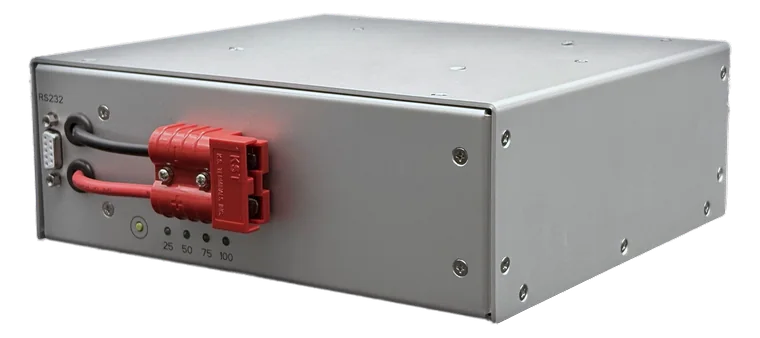
Cells today; custom 12 V / 24 V / 48 V packs, enclosure design and technology transfer on request. Tell us where lithium made you nervous.
Also at the booth